The expression "the lying, sinful forelock" in the above verse is most interesting. Research carried out in recent years revealed that the prefrontal area, which is responsible for the management of particular functions of the…
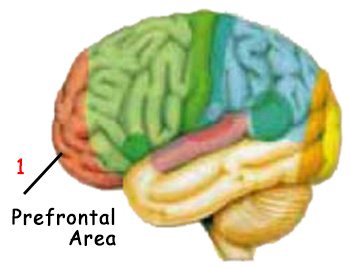
1. Prefrontal Area
«No indeed! If he does not stop, We will grab him by the forelock, a lying, sinful forelock.»
The expression "the lying, sinful forelock" in the above verse is most interesting. Research carried out in recent years revealed that the prefrontal area, which is responsible for the management of particular functions of the brain, lies in the frontal part of the skull. Scientists only discovered the functions of this area, which the Qur'an pointed out 1,400 years ago, in the last 60 years. If we look inside the skull at the front of the head, we will find the frontal area of the cerebrum. A book entitled Essentials of Anatomy and Physiology, which includes the results of the latest research on the functions of this area, says:
The motivation and the foresight to plan and initiate movements occur in the anterior portion of the frontal lobes, the prefrontal area. This is a region of association cortex…152
The book also says:
In relation to its involvement in motivation, the prefrontal area is also thought to be the functional center for aggression…153
So, this area of the cerebrum is responsible for planning, motivation, and initiating good and sinful behaviour, and is responsible for telling lies and the truth.
It is clear that the statement "the lying, sinful forelock" corresponds completely to the above explanations. This fact, which scientists have only discovered in the last 60 years, was stated by God in the Qur'an long years ago.
The stages in the womb
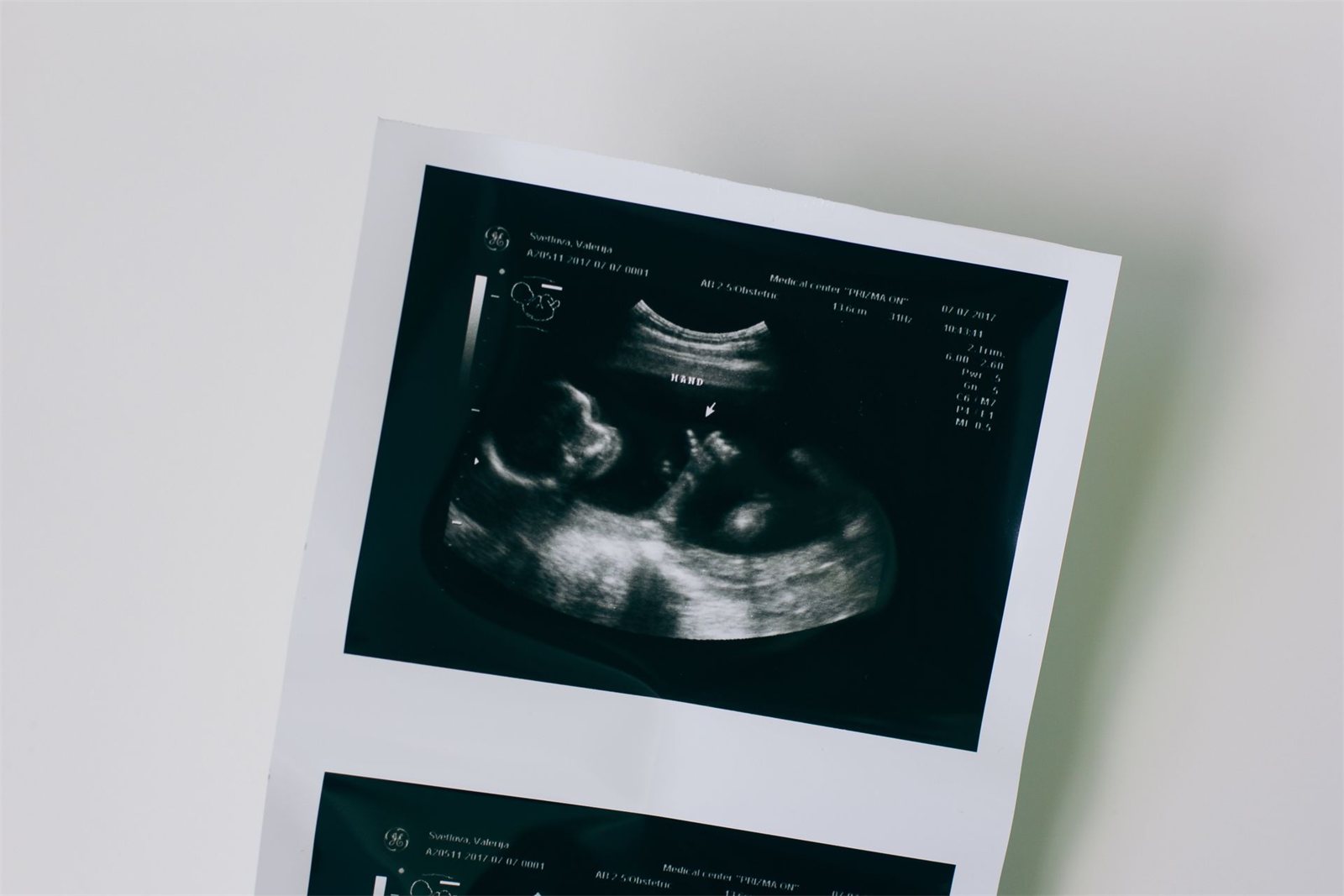
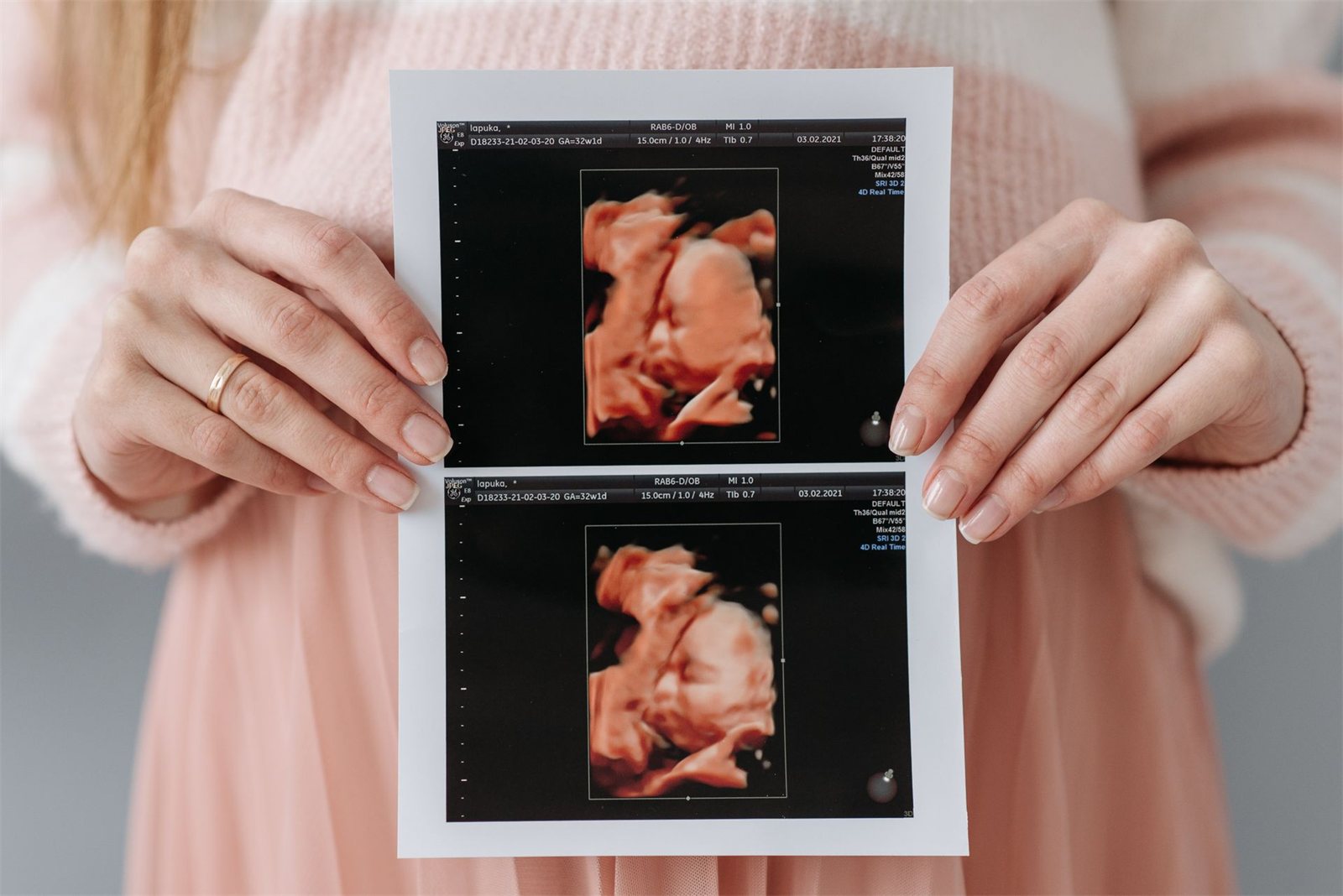
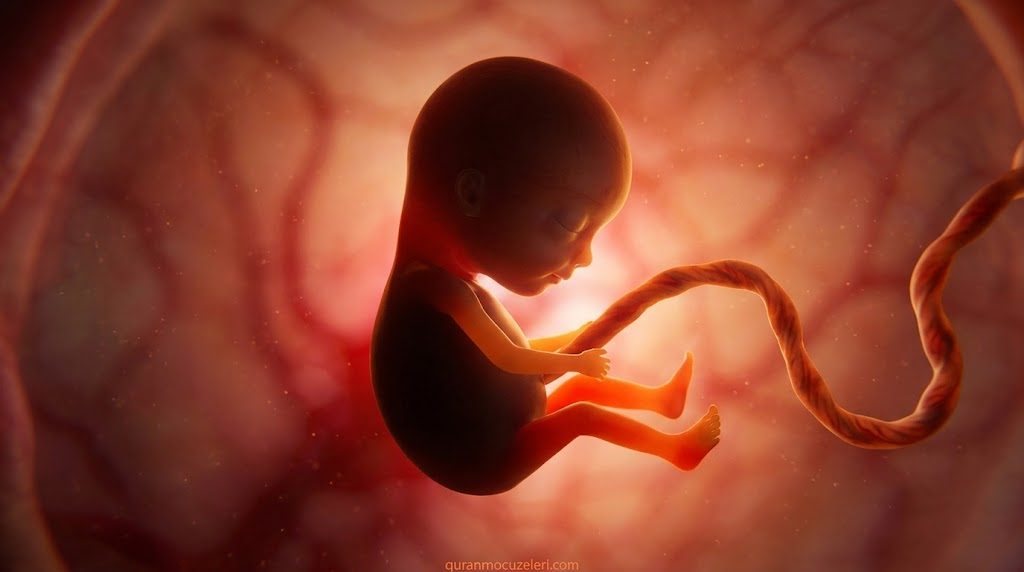
The Quran describes, in order, the stages a human passes through in the womb — nutfah, ‘alaqah, mudghah, bones, and their clothing with flesh. Modern embryology could see these stages only with microscopes and ultrasound.
Many diverse subjects are mentioned in the Qur'an in the course of inviting people to believe. Sometimes the heavens, sometimes animals, and sometimes plants are shown as evidence to man by God. In many of the verses, people are called upon to turn their attention to their own creation. They are often reminded how man came into the world, which stages he has passed through, and what his essence is:
«It is We Who have created you. Why, then, do you not accept the truth? Have you ever considered that (seed) which you emit? Is it you who create it? Or are We the Creator?»
The creation of man, and the miraculous aspect of this, is stressed in many other verses. Some items of information within these verses are so detailed that it is impossible for anyone living in the 7th century to have known them. Some of these are as follows:
Man is not created from the entire semen, but only a very small portion of it (sperm).
It is the male that determines the sex of the baby.
The human embryo adheres to the mother's uterus like a leech.
The embryo develops in three dark regions in the uterus.
People living when the Qur'an was revealed, to be sure, knew that the basic substance of birth was related to the semen of the male emitted during sexual intercourse. And the fact that the baby was born after a nine-month period was obviously an observable event not calling for any further investigation. However, the items of information just quoted were far above the level of learning of the people living at that time. These were verified by 20th century science.
Now, let us go over them one by one.
A Drop of Semen
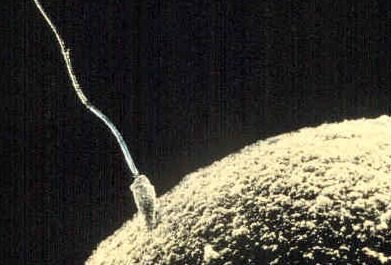
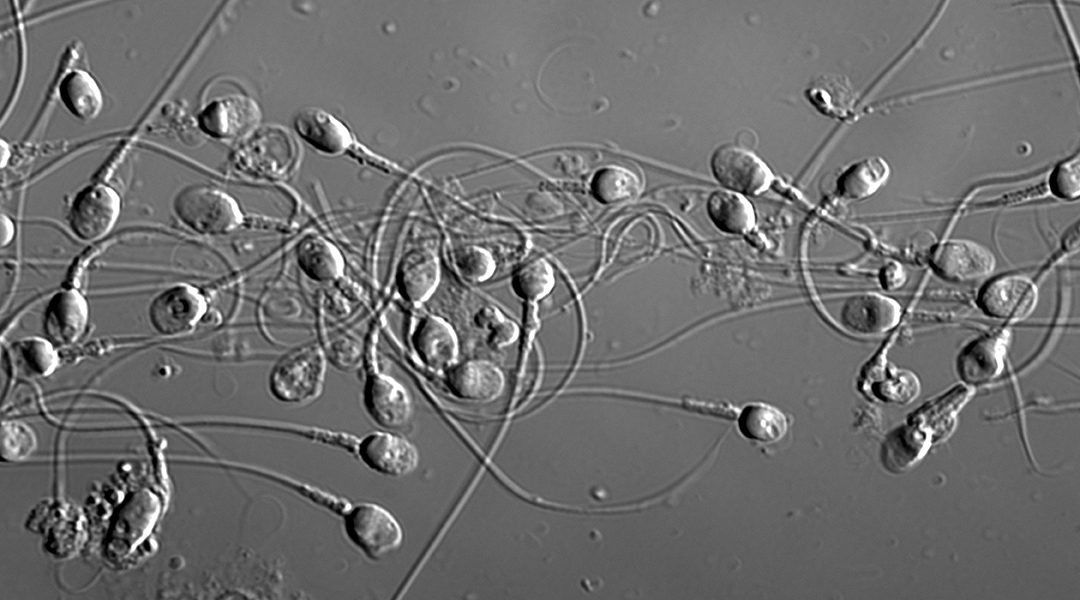
During sexual intercourse, 250 million sperms are emitted from the male at a time. The sperms undertake an arduous journey in the mother's body until they make it to the ovum. Only a thousand out of 250 million sperms succeed in reaching the ovum. At the end of this five-minute race, the ovum, half the size of a grain of salt, will let only one of the sperms in. That is, the essence of man is not the whole semen, but only a small part of it. This is explained in the Qur'an:
«Does man reckon he will be left uncontrolled (without purpose)? Was he not once a drop of ejected semen?»
In the picture to the left, we see semen ejected into the uterus. Only very few sperms out of 250 million sperms emitted from the male can make it to the ovum. The sperm that will fertilise the egg is the only one out of a thousand sperms that have managed to survive. The fact that man is made not from the entire semen, but only a small part of it, is related in the Qur'an with the expression, "a drop of ejected semen".
As we have seen, the Qur'an informs us that man is made not from the entire semen, but only a small part of it. That the particular emphasis in this statement announces a fact only discovered by modern science is evidence that the statement is divine in origin.
The Mixture in the Semen
In the Qur'an, it is said that masculinity or femininity are created out of "a drop of semen which has been ejected". However, until fairly recently, it was believed that a baby's sex was determined by the mother's cells. Science only discovered this information given in the Qur'an in the 20th century. This and many other similar details about the creation of man were stated in the Qur'an centuries ago.
The fluid called semen, which contains the sperms, does not consist of sperms alone. On the contrary, it is made up of a mixture of different fluids. These fluids have different functions, such as containing the sugar necessary for providing energy for the sperms, neutralising the acids at the entrance of the uterus, and creating a slippery environment for the easy movement of the sperms.
Interestingly enough, when semen is mentioned in the Qur'an, this fact, which was discovered by modern science, is also referred to, and semen is defined as a mixed fluid:
«We created man from a mingled drop to test him, and We made him hearing and seeing.»
In another verse, semen is again referred to as a mixture, and it is stressed that man is created from the "extract" of this mixture:
«He who has created all things in the best possible way. He commenced the creation of man from clay; then He made his progeny from an extract of discarded fluid.»
The Arabic word "sulala", translated as "extract", means the essential or best part of something. By either implication, it means "part of a whole". This shows that the Qur'an is the word of a Will that knows the creation of man down to its slightest detail. This Will is God, the Creator of man.
The Sex of the Baby
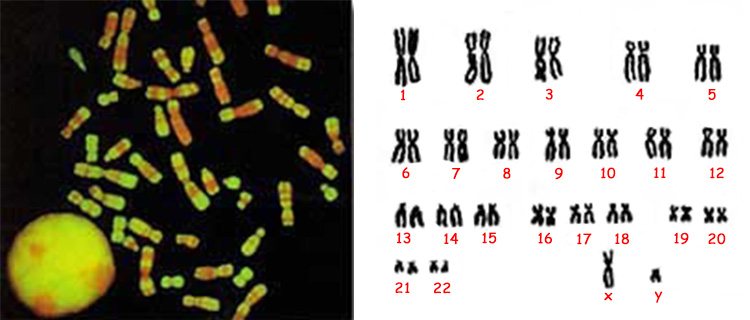
The Y chromosome carries characteristics of masculinity, while the X chromosome carries those of femininity. In the mother's egg, there is only the X chromosome, which determines female characteristics. In the semen from the father, there are sperms that includes either X or Y chromosomes. Therefore, the sex of the baby depends on whether the sperm fertilising the egg contains an X or Y chromosome. In other words, as stated in the verse, the factor determining the sex of the baby is the semen, which comes from the father. This knowledge, which could not have been known at the time when the Qur'an was revealed, is evidence to the fact that the Qur'an is the word of God.
Until fairly recently, it was thought that a baby's sex was determined by the mother's cells. Or at least, it was believed that the sex was determined by the male and female cells together. But we are given different information in the Qur'an, where it is stated that masculinity or femininity is created out of "a drop of sperm which has been ejected".
«He has created both sexes, male and female from a drop of semen which has been ejected.»
The developing disciplines of genetics and molecular biology have scientifically validated the accuracy of this information given by the Qur'an. It is now understood that sex is determined by the sperm cells from the male, and that the female has no role in this process.
Chromosomes are the main elements in determining sex. Two of the 46 chromosomes that determine the structure of a human being are identified as the sex chromosomes. These two chromosomes are called "XY" in males, and "XX" in females, because the shapes of the chromosomes resemble these letters. The Y chromosome carries the genes that code for masculinity, while the X chromosome carries the genes that code for femininity.
The formation of a new human being begins with the cross combination of one of these chromosomes, which exist in males and females in pairs. In females, both components of the sex cell, which divides into two during ovulation, carry X chromosomes. The sex cell of a male, on the other hand, produces two different kinds of sperm, one that contains X chromosomes and the other Y chromosomes. If an X chromosome from the female unites with a sperm that contains an X chromosome, then the baby is female. If it unites with the sperm that contains a Y chromosome, the baby is male.
In the Qur'an, it is said that masculinity or femininity are created out of "a drop of semen which has been ejected". However, until fairly recently, it was believed that a baby's sex was determined by the mother's cells. Science only discovered this information given in the Qur'an in the 20th century. This and many other similar details about the creation of man were stated in the Qur'an centuries ago.
In other words, a baby's sex is determined by which chromosome from the male unites with the female's ovum.
None of this was known until the discovery of genetics in the 20th century. Indeed, in many cultures, it was believed that a baby's sex was determined by the female's body. That was why women were blamed when they gave birth to girls.
Thirteen centuries before human genes were discovered, however, the Qur'an revealed information that denies this superstition, and referred to the origin of sex lying not with women, but with the semen coming from men.
The Clot Clinging to the Uterus
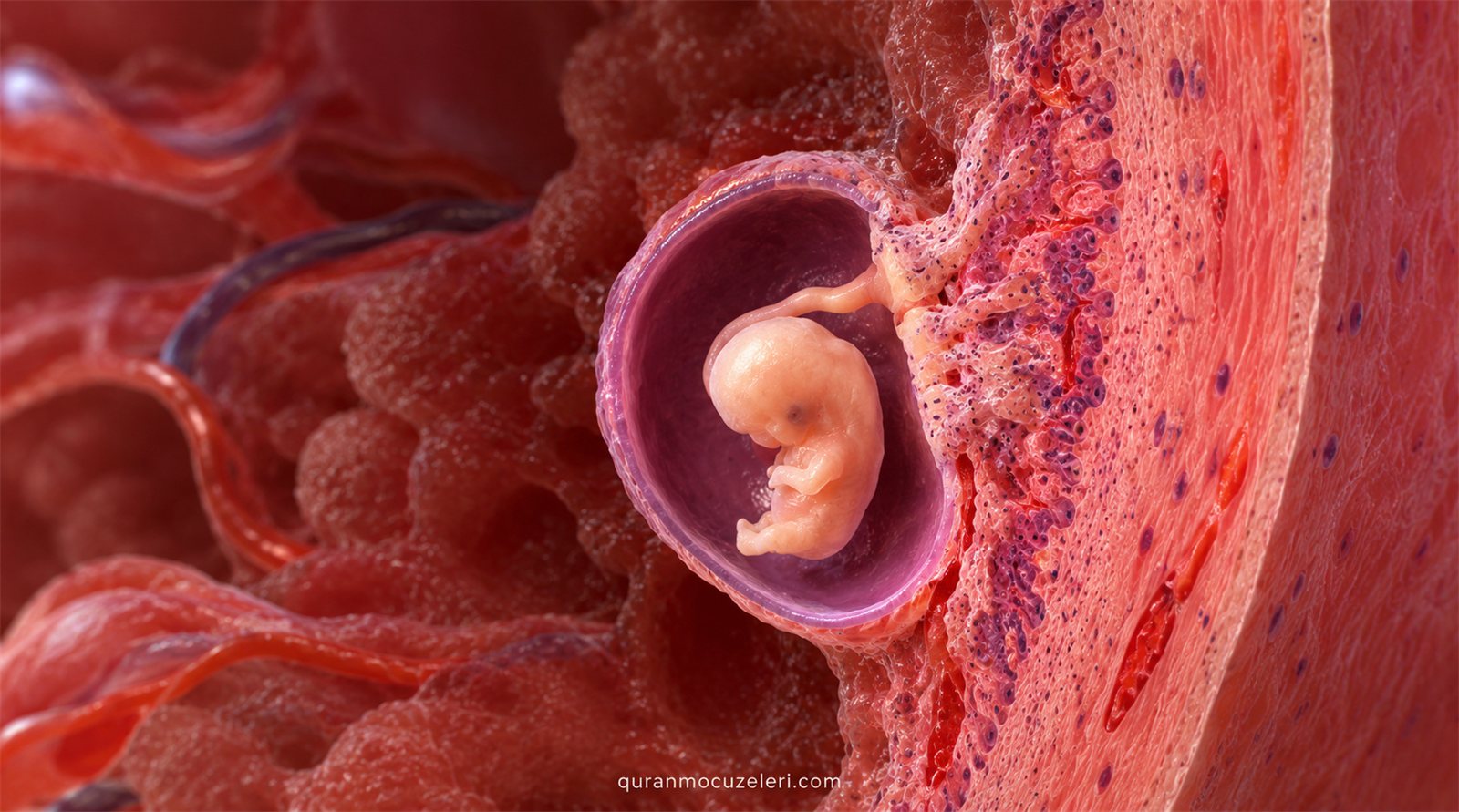
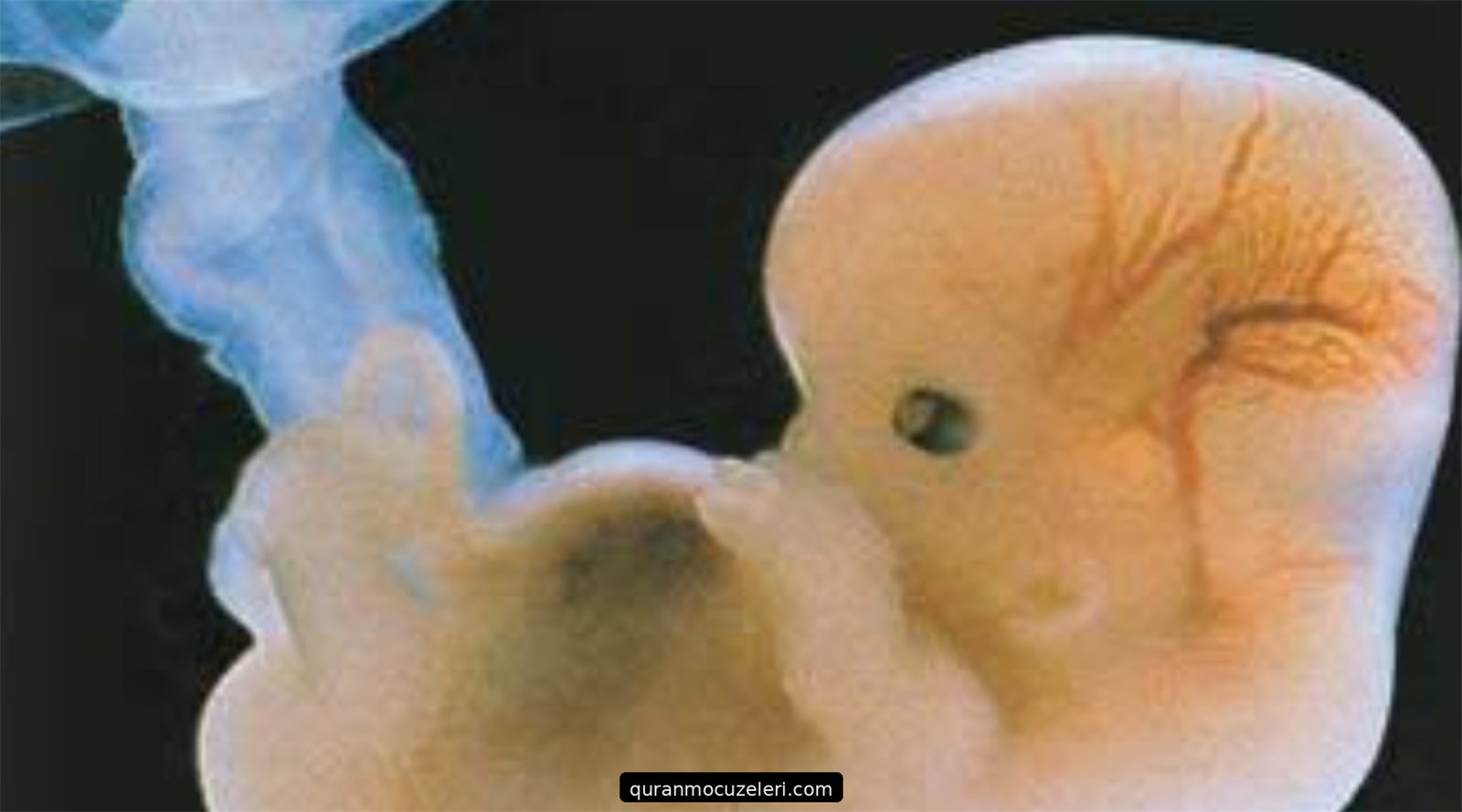
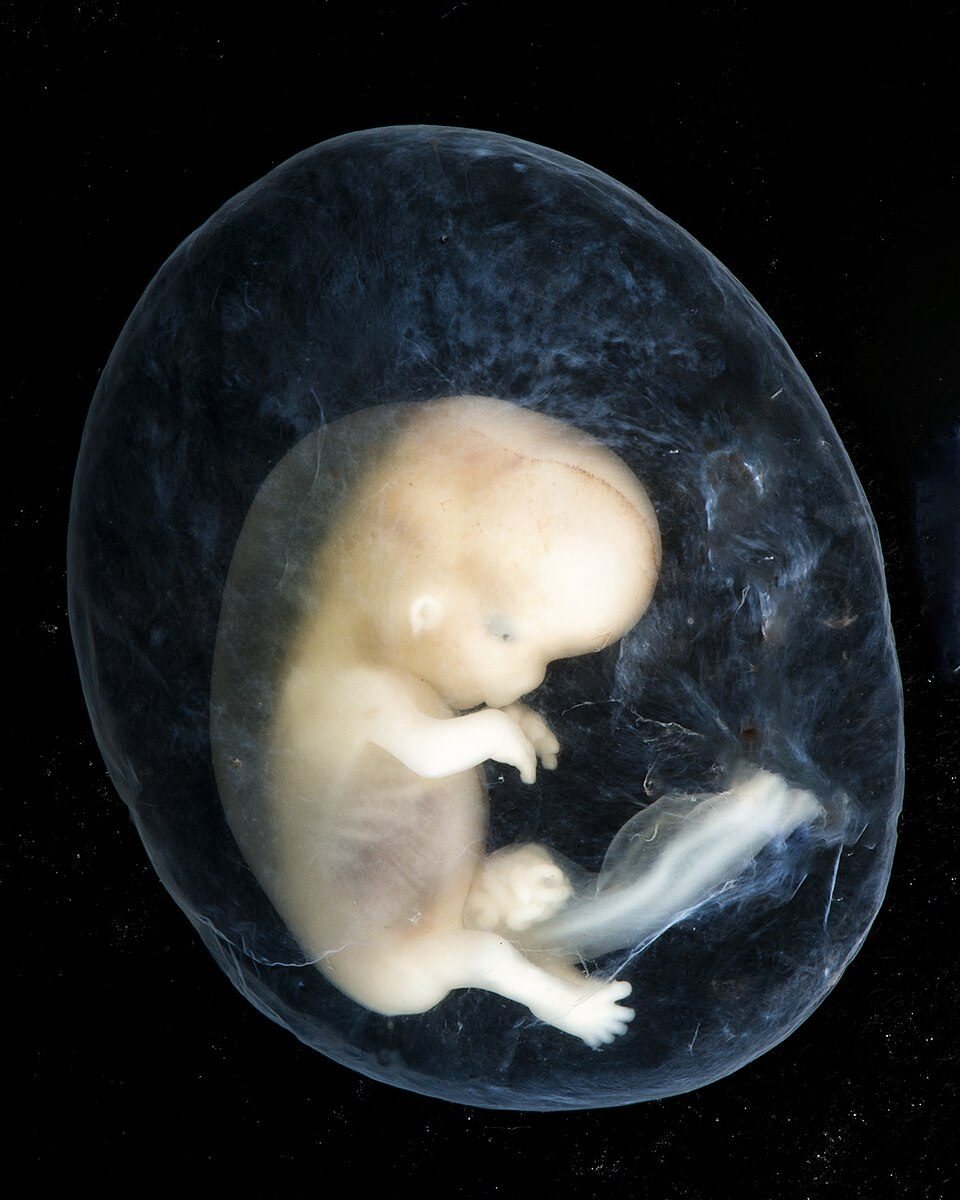
In the first phase of its development, the baby in the mother's womb is in the form of a zygote, which clings to the uterus in order to take nourishment from the mother's blood. In the picture above is a zygote, which looks like a piece of flesh. This formation, which has been discovered by modern embryology, was miraculously stated in the Qur'an 14 centuries ago with the word "alaq", which means "a thing that clings to some place" and is used to describe leeches that cling to a body to suck blood.
If we keep on examining the facts announced to us in the Qur'an about the formation of human beings, we again encounter some very important scientific miracles.
When the sperm of the male unites with the ovum of the female, the essence of the baby to be born is formed. This single cell, known as a "zygote" in biology, will instantly start to reproduce by dividing, and eventually become a "piece of flesh" called an embryo. This of course can only be seen by human beings with the aid of a microscope.
The embryo, however, does not spend its developmental period in a void. It clings to the uterus just like roots that are firmly fixed to the earth by their tendrils. Through this bond, the embryo can obtain the substances essential to its development from the mother's body.154
Here, at this point, a very significant miracle of the Qur'an is revealed. While referring to the embryo developing in the mother's womb, God uses the word "alaq" in the Qur'an:
«Recite: In the name of your Lord Who created man from alaq. Recite:
The meaning of the word "alaq" in Arabic is "a thing that clings to some place". The word is literally used to describe leeches that cling to a body to suck blood.
Certainly, the use of such an appropriate word for the embryo developing in the mother's womb, proves once again that the Qur'an is a revelation from God, the Lord of all the Worlds.
The Wrapping of Muscles over the Bones
The bones of the baby completing its development in the mother's womb are clothed with flesh during one particular stage.
Another important aspect of the information given in the verses of the Qur'an is the developmental stages of a human being in the mother's womb. It is stated in the verses that in the mother's womb, the bones develop first, and then the muscles form which wrap around them.
«(We) then formed the drop into a clot and formed the clot into a lump and formed the lump into bones and clothed the bones in flesh; and then brought him into being as another creature. Blessed be God, the Best of Creators!»
Embryology is the branch of science that studies the development of the embryo in the mother's womb. Until very recently, embryologists assumed that the bones and muscles in an embryo developed at the same time. For this reason, for a long time, some people claimed that these verses conflicted with science. Yet, advanced microscopic research conducted by virtue of new technological developments has revealed that the revelation of the Qur'an is word for word correct.
These observations at the microscopic level showed that the development inside the mother's womb takes place in just the way it is described in the verses. First, the cartilage tissue of the embryo ossifies. Then muscular cells that are selected from amongst the tissue around the bones come together and wrap around the bones.
This event is described in a scientific publication titled Developing Human in the following words:
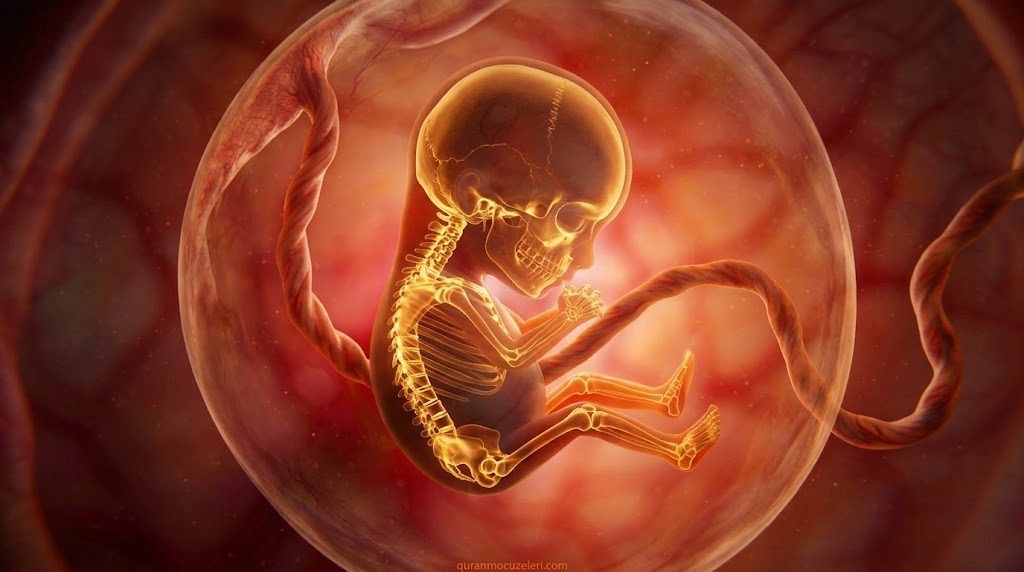
During the seventh week, the skeleton begins to spread throughout the body and the bones take their familiar shapes. At the end of the seventh week and during the eighth week the muscles take their positions around the bone forms.155
In short, man's developmental stages as described in the Qur'an are in perfect harmony with the findings of modern embryology.
«Many stages of a baby's development in the mother's womb are related in the Qur'an. As described in verse 14 of Sura Muminun, the cartilage of the embryo in the mother's womb ossifies first. Then these bones are covered with muscle cells. God describes this development with the verse: "…(We then) formed the lump into bones and clothed the bones in flesh»
Three Stages of the Baby in the Womb
In the Qur'an, it is related that man is created in a three-stage process in the mother's womb.
«... He creates you stage by stage in your mothers' wombs in a threefold darkness. That is God, your Lord. Sovereignty is His. There is no god but Him. So what has made you deviate?»
In the verse 6 of Sura Zumar, it is pointed out that man is created in the mother's womb in three distinct stages. Indeed, modern embryology has revealed that the baby's embryological development takes place in three distinct regions in the mother's womb.
As will be understood, it is pointed out in this verse that a human being is created in the mother's womb in three distinct stages. Indeed, modern biology has revealed that the baby's embryological development takes place in three distinct regions in the mother's womb. Today, in all the embryology textbooks studied in faculties of medicine, this subject is taken as an element of basic knowledge. For instance in Basic Human Embryology, a fundamental reference text in the field of embryology, this fact is stated as follows:
"The life in the uterus has three stages: pre-embryonic; first two and a half weeks, embryonic; until the end of the eight week, and fetal; from the eight week to labor."156
These phases refer to the different developmental stages of a baby. In brief, the main characteristics of these developmental stages are as follows:
- Pre-embryonic stage
In this first phase, the zygote grows by division, and when it becomes a cell cluster, it buries itself in the wall of the uterus. While they continue growing, the cells organise themselves in three layers.
- Embryonic Stage
The second phase lasts for five and a half weeks, during which the baby is called an "embryo". In this stage, the basic organs and systems of the body start to appear from the cell layers.
- Fetal stage
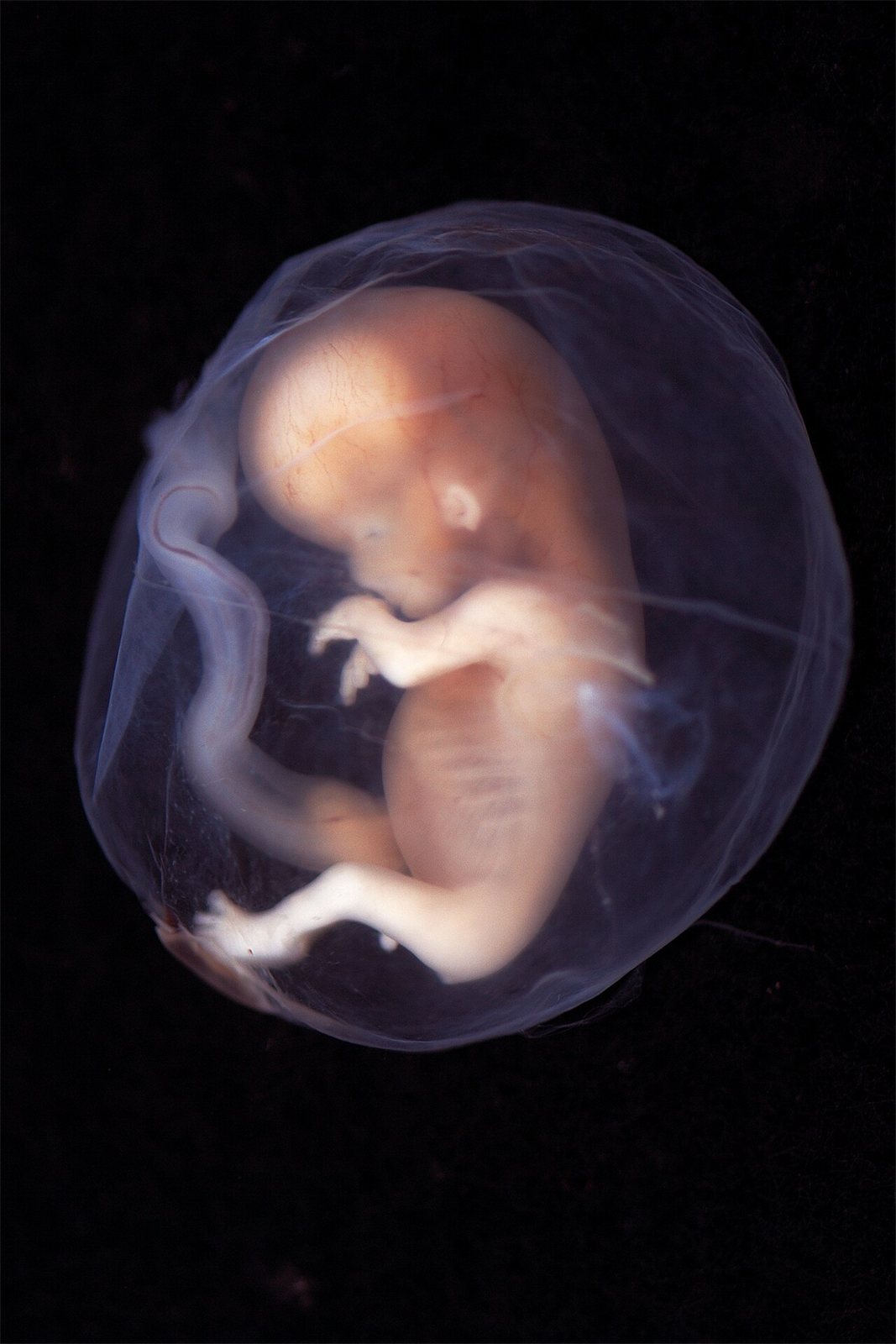
From this stage on, the embryo is called a "foetus". This phase begins at the eighth week of gestation and lasts until the moment of birth. The distinctive characteristic of this stage is that the foetus looks just like a human being, with its face, hands and feet. Although it is only 3 cm. long initially, all of its organs have become apparent. This phase lasts for about 30 weeks, and development continues until the week of delivery.
Information on the development in the mother's womb became available only after observations with modern devices. Yet, just like many other scientific facts, these pieces of information are imparted in the verses of the Qur'an in a miraculous way. The fact that such detailed and accurate information was given in the Qur'an at a time when people had scarce information on medical matters is clear evidence that the Qur'an is not the word of man, but the word of God.
The Creation of Human Beings from Water
When we look at the verses concerned with the creation of human beings and living things, we clearly see evidence of a miracle. One such miracle is of the creation of living things from water.
«Allah created every [living] creature from water. Some of them go on their bellies, some of them on two legs, and some on four. Allah creates whatever He wills. Allah has power over all things.»
«Do those who disbelieve not see that the heavens and the Earth were sewn together and then We unstitched them and that We made from water every living thing? So won't they believe?»
When we look at the verses concerned with the creation of human beings and living things, we clearly see evidence of a miracle. One such miracle is of the creation of living things from water. It was only possible for people to come by that information, clearly expressed in those verses, hundreds of years afterwards with the invention of the microscope.
The words "Water is the main component of organic matter. 50-90% of the weight of living things consists of water" appear regularly in encyclopaedias. Furthermore, 80% of the cytoplasm (basic cell material) of a standard animal cell is described as water in biology textbooks. The analysis of cytoplasm and its appearance in textbooks took place hundreds of years after the revelation of the Qur'an. It is therefore impossible for this fact, now accepted by the scientific community, to have been known at the time the Qur'an was revealed. Yet, attention was drawn to it in the Qur'an 1,400 years before its discovery.
Creation from Clay
In the Qur'an, Allah reveals that the creation of the human is a miracle. The first human being was created by Allah shaping clay into human form and breathing a soul into it:
In the Qur'an, Allah reveals that the creation of the human is a miracle. The first human being was created by Allah shaping clay into human form and breathing a soul into it:
«Your Lord said to the angels, " I am going to create a human being out of clay. When I have formed him and breathed My Spirit into him, fall down in prostration to him!»
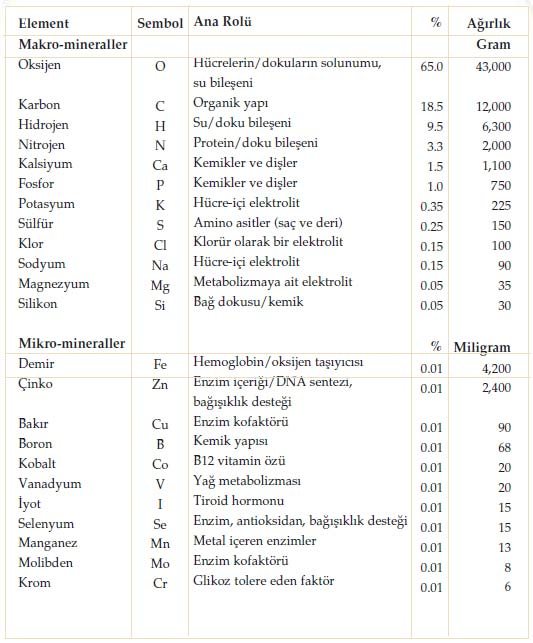
When the human body is examined today, it may be discovered that many elements present on the earth are also to be found in the body. Living tissues contain 95% carbon, hydrogen, oxygen, nitrogen, phosphorus and sulphur, with a total of 26 different elements.157
The Arabic word " sulaalah ," translated as "extract" in the verse, means "representative example, essence." As we have seen, the information revealed in the Qur'an 1,400 years ago confirms what modern science tells us-the fact that the same elements are employed in human creation as those found in the soil.
Below is a diagram showing the distribution of the elements in a 70-kilo (140 pound)human being.
The Programming in Genes
The word " qaddara ," translated as " proportioned " in the above verse, comes from the Arabic verb " qadara ." It translates as "arranging, setting out, planning, programming, seeing the future, the writing of everything in…
«From what thing did He create him? From a drop of sperm He created him and proportioned him. Then He eases the way for him.»
The word " qaddara ," translated as " proportioned " in the above verse, comes from the Arabic verb " qadara ." It translates as "arranging, setting out, planning, programming, seeing the future, the writing of everything in destiny (by Allah)."
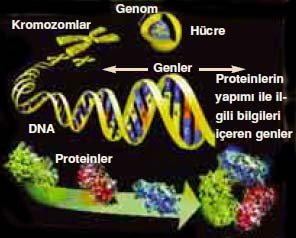
When the father's sperm cell fertilises the mother's egg, the parents' genes combine to determine all of the baby's physical characteristics. Each one of these thousands of genes has a specific function. It is the genes which determine the colour of the eyes and hair, height, facial features, skeletal shape and the countless details in the internal organs, brain, nerves and muscles. In addition to all the physical characteristics, thousands of different processes taking place in the cells and bodyand indeed the control of the whole system-are recorded in the genes. For example, whether a person's blood pressure is generally high, low or normal depends on the information in his or her genes.
The first cell which forms when the sperm and the egg are joined also forms the first copy of the DNAmolecule which will carry the code in every cell of the person's body, right up until death. DNAis a molecule of considerable size. It is carefully protected within the nucleus of the cell and this molecule is an information bank of the human body as it contains the genes we mentioned above. The first cell, the fertilised egg, then divides and multiplies in the light of the program recorded in the DNA. The tissues and organs begin to form: This is the beginning of a human being. The coordination of this complex structuring is brought about by the DNAmolecule. This is a molecule consisting of atoms such as carbon, phosphorus, nitrogen, hydrogen and oxygen.
The information capacity recorded in DNA is of a size which astonishes scientists. There is enough information in a single human DNAmolecule to fill a million encyclopaedia pages or 1,000 volumes. To put it another way, the nucleus of a cell contains information, equivalent to that in a 1 million-page encyclopaedia. It serves to control all the functions of the human body. To make a comparison, the 23-volume Encyclopaedia Britannica, one of the largest encyclopaedias in the world, contains a total of 25,000 pages. Yet a single molecule in the nucleus of a cell, and which is so much smaller than that cell, contains a store of information 40 times larger than the world's largest encyclopaedias. That means that what we have here is a 1,000-volume encyclopaedia, the like of which exists nowhere else on Earth. This is a miracle of design and creation within our very own bodies, for which evolutionists and materialists have no answer.
Bearing in mind that the structure of DNA was unravelled by Francis Crick in 1953, it is truly amazing that the Qur'an pointed to the concept of "genetic planning" in an age when, as we have mentioned previously, mankind's knowledge was very limited. Geneticists were unable to discuss until the end of the 19th century and these remarkable facts act again as proofs that the Qur'an is the word of Allah.
The Menstrual Period
The menstrual period is when the unfertilised egg is expelled from the body. Since fertilisation has not taken place, the walls of the previously readied womb contract and the egg is expelled with the breaking of tiny blood…
The menstrual period is when the unfertilised egg is expelled from the body. Since fertilisation has not taken place, the walls of the previously readied womb contract and the egg is expelled with the breaking of tiny blood vessels. Following that, the body will then begin preparations to repeat the whole process all over again.
All of these stages are repeated in all women over a specific period. Every month, new egg cells form, the same hormones are secreted-again and again at the same times. Thus the female body is prepared as if it will be fertilised. However, in the final stage, the absence or presence of the sperm changes the nature of the preparations in the body.
During the period in question, the changes in the empty space in the womb can only be identified by an anatomical or gynaecological examination. Yet these changes, only recently identified by scientists, are miraculously indicated in Surat ar-Ra‘d:
«Allah knows what every female bears and every shrinking of the womb and every swelling. Everything has its measure with Him.»
At the beginning of the menstrual period, the mucous on the walls of the womb (the endometrium layer) is 0.5 mm (0.02 inch)thick. Under the effect of hormones secreted by the egg, this layer grows and reaches a thickness of 5-6 mm (0.2 inch). This layer is then discarded in the absence of fertilisation. As we see from the above verse, this monthly increase and reduction in the walls of the womb is indicated in the Qur'an.
Pregnancy and Birth
The foetus is fully formed at the end of the sixth month. The womb then enters the incubation period. All the baby's bodily organs and systems develop fully during that time, and the womb accelerates this growth by providing…
«Curse man for his ingratitude! From what thing did He create him? From a drop of sperm He created him and proportioned him. Then He eases the way for him.»
The foetus is fully formed at the end of the sixth month. The womb then enters the incubation period. All the baby's bodily organs and systems develop fully during that time, and the womb accelerates this growth by providing nourishment for the foetus. This period continues until the baby emerges from the mother's womb.
The birth canal is normally very narrow and it is difficult for the foetus to pass through it. During birth, however, a number of physiological changes take place in the mother's body. These changes allow the foetus to move easily through the birth canal. Some of these changes include: the expansion of the joints in the pelvic bones in order to widen the birth canal, the relaxation of the muscles to further widen the canal and the lubrication of the canal with amniotic fluid.159
These pre-birth changes are described in one scientific source in these terms:
This series of occurrences is openly indicated in the verse of the Qur'an, " Then He eases the way for him. " (Qur'an, 80:20) However, it has been possible today to determine these physiological changeswhich Allah informed us of 1,400 years ago-only with the use of a number of technological devices.
The Sequence in Development of Human Organs
The above verses refer to a number of senses given to human beings by Allah. These are always referred in a specific order in the Qur'an: hearing, sight, feeling and understanding.
«It is He Who has created hearing, sight and minds for you. What little thanks you show!»
«Say: "What do you think? If Allah took away your hearing and your sight and sealed up your hearts, what deity is there, other than Allah, who could give them back to you?"…»
The above verses refer to a number of senses given to human beings by Allah. These are always referred in a specific order in the Qur'an: hearing, sight, feeling and understanding.
In a paper published in the Journal of the Islamic Medical Association, Dr. Keith Moore states that during the development of the foetus, the eye begins to form after the inner ear has assumed its first form. He says the brain, the centre of feeling and understanding, begins its development after the ear and the eye.161
The foetus' ears begin to develop as early as the twenty-second day of pregnancy and become fully functional in the fourth month. After that, the foetus can hear sounds in its mother's womb. For that reason, the sense of hearing forms before the other vital functions for a new-born baby. The order set out in the Qur'an is striking from that point of view.
Mother's Milk
Mother's milk is an unmatched mixture that is created by God as both an excellent food-source for the newborn baby, and a substance that increases its resistance to diseases.
Mother's milk is an unmatched mixture that is created by God as both an excellent food-source for the newborn baby, and a substance that increases its resistance to diseases. Even artificial baby food produced by today's technology cannot substitute for this miraculous source of nutrition.
Every day, a new benefit of mother's milk to the baby is discovered. One of the facts that science has discovered about mother's milk is that suckling up to two years after birth is very beneficial.162 God gives us this important information, which was discovered by science only very recently, with the verse "…his weaning was in two years." 14 centuries ago.
«And We have enjoined upon man goodness towards his parents:
his mother bore him by bearing strain upon strain, and his weaning was in two years: (hence, O man,) be grateful to Me and to your parents; to Me is the eventual coming.»
When the Quran speaks of mankind being brought back to life, it draws particular attention to the fingertips. That every person’s fingerprint is unique was discovered only at the end of the 19th century.
every click makes a new, unique print
8 billion+: people — every fingerprint different
1880: Henry Faulds wrote in Nature on their uniqueness
before birth: the fingerprint takes its final form
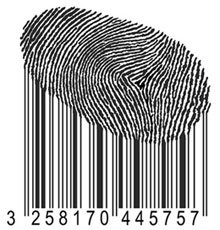
Everyone, including identical twins, has a unique fingerprint. In other words, people's identities are coded at their fingertips. This coding system may also be compared to the barcode system that is used today.
While it is stated in the Qur'an that it is easy for God to bring man back to life after death, peoples' fingerprints are particularly emphasized:
«Yes, We are able to put together in perfect order the very tips of his fingers.»
The emphasis on fingerprints has a very special meaning. This is because everyone's fingerprint is unique to himself. Every person who is alive or who has ever lived in this world has a set of unique fingerprints.
That is why fingerprints are accepted as a very important proof of identity, exclusive to their owner, and are used for this purpose around the world.
But what is important is that this feature of fingerprints was only discovered in the late 19th century. Before then, people regarded fingerprints as ordinary curves without any specific importance or meaning. However in the Qur'an, God points to the fingertips, which did not attract anyone's attention at that time, and calls our attention to their importance–an importance that was only finally understood in our day.
The ears remain active in sleep
The Quran describes how the Companions of the Cave were put to sleep for many years with the words “We struck upon their ears”. Science has found that the ear is the only sense organ that keeps working during sleep.
try the “Make a sound” button
1 organ: still receiving sound in sleep: the ear
1929: Hans Berger published the first human EEG
every 2 hours: how often bedridden patients are turned
«So We sealed their ears [ with sleep ] in the cave for a number of years.»
The original Arabic of the phrase " We sealed their ears " in the Qur'an is the verb daraba. This bears the metaphorical meaning of "We have made them sleep." Used in reference to the ears, daraba means "preventing the ears from hearing." The fact that only the sense of hearing is mentioned here is very significant.
According to recent scientific discoveries, the ear is the only sensory organ active while a person is sleeping. This is why we need an alarm clock to wake up.164
The wisdom of the phrase " We sealed their ears " is, in all probability, that Allah closed the hearing of the young people in question, for which reason they remained asleep for many years.
The Importance of Movement in Sleep
The above verse refers to the Companions of the Cave, who remained asleep for hundreds of years. In addition, Allah also reveals that He moved their bodies to the left and right.
«You would have supposed them to be awake, whereas in fact they were asleep. We moved them to the right and to the left, and, at the entrance, their dog stretched out its paws. If you had looked down and seen them, you would have turned from them and run, and have been filled with terror at the sight of them.»
The above verse refers to the Companions of the Cave, who remained asleep for hundreds of years. In addition, Allah also reveals that He moved their bodies to the left and right. The wisdom of this was only discovered in recent times.
People who remain lying down in the same position for long period of time encounter serious health problems, such as circulation difficulties, sores, and blood clotting in that part of the body in contact with the surface on which they lie.165
The resulting sores are known as "bed sores" or "pressure sores." Due to the constant pressure on one part of the body when one is not moving for a long period of time, the blood vessels become constricted and can close altogether. As a result, the oxygen and other nutrients carried by the blood fail to reach the skin, and the skin begins to die. This leads to the appearance of sores on the body. Unless these sores are treated, fat and muscles can also die.166
These sores, which form under the skin or tissue, can assume serious dimensions unless treated. If they become infected, they can even lead to death. The healthiest thing to do, therefore, is to change the position of the body every 15 minutes in order to reduce this pressure. Patients who cannot move themselves therefore receive special care and are moved every 2 hours by other people.167
The fact that these medical facts, only discovered in the last century, are referred to in the Qur'an is yet another of its miracles.
Reduced Movement at Night
The Arabic word sakan, which appears in the original of the above verse, means "repose, rest, time to withdraw to rest, time for a break." As indicated by Allah, night is the time when human beings rest.
«He splits the sky at dawn, and appoints the night as a time of stillness and the Sun and Moon as a means of reckoning...»
The Arabic word sakan, which appears in the original of the above verse, means "repose, rest, time to withdraw to rest, time for a break." As indicated by Allah, night is the time when human beings rest. The hormone melatonin, secreted at night, prepares the body for sleep by slowing down peoples' physical movements, making them sleepy and tired, and functioning as a natural tranquilliser that eases their minds.168
During sleep, heartbeat and respiration rhythms slow down and blood pressure falls. In the morning, the production of the hormones stops and the body is stimulated to awaken.169
At the same time, sleep allows the body's muscles and tissues to repair themselves and the body to replace old or dead cells. Since energy expenditure is reduced during sleep, the body stores energy throughout the night. Several chemicals vital for the immune system and growth hormones are also secreted during sleep.170
In the event that people fail to get enough sleep, therefore, the immune system is immediately affected and the body becomes more susceptible to sickness. If people are unable to sleep for two nights, they will find it harder to concentrate and their error levels will rise. If they are deprived of sleep for three nights, they will begin to hallucinate and be unable to think logically.171
Night is as much a time for rest for other living things as it is for human beings. This situation, referred to by Allah in the verse " the night as a time of stillness, " indicates a fact that cannot be observed by the naked eye: Many activities that take place during the day slow down and rest during the night. In plants, for instance, perspiration in leaves and photosynthesis begin to rise when the Sun rises. In the afternoon, the situation is reversed. In other words, photosynthesis slows down and respiration increases since perspiration is accelerated as the temperature rises. At night time, as the temperature falls, perspiration slows down and the plant rests. Most plants would die if just one night failed to take place. From that point of view, night means rest and reinvigoration for plants, just as it does for human beings.172
Movement at the molecular level also declines at night. The radiation emitted by the Sun during the day activates the atoms and molecules in Earth's atmosphere and causes them to achieve higher energy levels. As darkness falls, the atoms and molecules fall to lower energy levels and start to give off radiation.173
These facts are, in all probability, indicated in Surat al-An‘am 96 and reveal yet another of the Qur'an's countless miracles. (Allah knows best.)
Chest Contraction with Increasing Height
Human beings need oxygen and air pressure in order to live. Breathing is made possible by the oxygen in the atmosphere reaching the air sacs in our lungs.
Human beings need oxygen and air pressure in order to live. Breathing is made possible by the oxygen in the atmosphere reaching the air sacs in our lungs. As elevation rises, however, atmospheric pressure goes down as the atmosphere becomes thinner. Therefore, the amount of oxygen entering the blood stream declines and it becomes harder to breathe. As the air sacs grow narrow and contract, we feel as if we cannot breathe.
If the amount of oxygen in the blood is less than the body needs, several symptoms emerge: extreme fatigue, headaches, dizziness, nausea, and loss of judgement. When a certain height is reached, it finally becomes impossible for a human being to breathe at all.174
This is why we need oxygen bottles and special clothing in order to survive at such elevations.
Someone at 5,000-7,500 metres (16,500-24,500 feet) above sealevel may faint and go into a coma because of breathing difficulties. That explains the presence of oxygen equipment in airplanes. There are also special systems that regulate air pressure when planes fly at 9,000-10,000 metres (29,500-33,000 feet) above sealevel.
Anoxia occurs when oxygen fails to reach the tissues. This oxygen deficiency occurs at heights of 3,000-4,500 metres (10,000- 15,000 feet). Some people even lose consciousness at such elevations, but can be saved by immediate oxygen treatment.
In the comparison made in the verse below, this physical truth, the changes that take place in the chest with increasing height, is indicated in these terms:
«When Allah desires to guide someone, He expands his breast to Islam. When He desires to misguide someone, He makes his breast narrow and constricted as if he were climbing up into the sky. That is how Allah defiles those who have no faith.»
Modern medicine shows that squeezing an object during labor facilitates the baby's downward passage through the birth canal. The muscles used during contraction are the same as those that propel the baby outside the womb.
«The pains of labor drove her to the trunk of a date-palm. She said, 'Oh if only I had died before this time and was something discarded and forgotten!' A voice called out to her from under her, 'Do not grieve! Your Lord has placed a small stream at your feet. Shake the trunk of the palm towards you and fresh, ripe dates will drop down onto you.'»
Modern medicine shows that squeezing an object during labor facilitates the baby's downward passage through the birth canal. The muscles used during contraction are the same as those that propel the baby outside the womb. Various methods are employed to achieve this, such as pulling on a cord suspended from the ceiling or on arms attached to the two sides of the bed. Also, the mother also has the option of holding onto and squeezing someone's hand.
A U-shaped bar, known as a "squat bar," is mounted onto the bed during labor and this is then used by the mother to quicken the delivery. Pulling on this bar facilitates the baby's departure from the womb, shortens the length of the birth canal, widens the mouth of the womb and reduces the need for many other devices and techniques during labor.175
This simple bar also helps the mother's squatting motions as she pulls herself up and down on it. It also means the mother remains immobile as the baby emerges.176 In this position, the muscles needed to move the baby down the birth canal expend the minimum amount of energy. In addition, with the expansion of the pelvic bone, 30% more room is made available for the baby to pass through. With the expansion and contraction movement, the body's propulsive force is raised to the highest level and the baby is able to move smoothly during the birth process.
There is great wisdom in the way that, by means of Allah's angels, Mary shook the branches of the palm tree toward her. The Arabic word " huzzee" means "to shake fast, to move or to rock." It has been well-documented that dates facilitates the labor process and possess powerful and nutritious properties. But in addition, we must also note that as Mary pulled the branches toward her to shake the dates from their branches must also have facilitated the birth and widened the birth canal. This technique applied in our own day by midwives all over the world, is yet another compelling proof that Allah supported Mary with His compassion with the Wisest Counsel. It also proves, once again, that the Qur'an can only be a text sent by our Lord, the Omniscient.
The Mother's Womb with Its Secure Protection
The above verses about the Creation of human beings contain fundamental information from the field of embryology.
Although the embryo is foreign to the mother’s womb, it is not attacked by the defense system. This is a miraculous state of affairs intended to protect the embryo.
«Did We not create you from a base fluid, then place it in a secure repository for a recognized term? It is We Who determine. What an excellent Determiner!»
«We created man from the purest kind of clay; then made him a drop in a secure receptacle; then formed the drop into a clot and formed the clot into a lump and formed the lump into bones and clothed the bones in flesh; and then brought him into being as another creature. Blessed be Allah, the Best of Creators!»
The above verses about the Creation of human beings contain fundamental information from the field of embryology. The reference “a secure receptacle”, a description of the womb, indicates certain technical and biological truths which are of great significance to modern scientists. (Allah knows the truth.) A “zygote” is the term given to what is produced by the sperm and egg cells coming together. This process continues until we witness the emergence of a complete human being, made up of trillions of cells all working in harmony: this all takes place in the safety of the mother's womb. This remarkable place, where the embryo completes its nine months of development is, as the verse tells us, “a secure receptacle.”
The word “makeenin" translated as “secure” above, also suggests such meanings as “unshakeable, sound, resolute, powerful, fixed and safely put in place.” The word “qararin" also means “location, stability, permanence and place of settlement.” These words very wisely describe the womb as a sound and safe location.
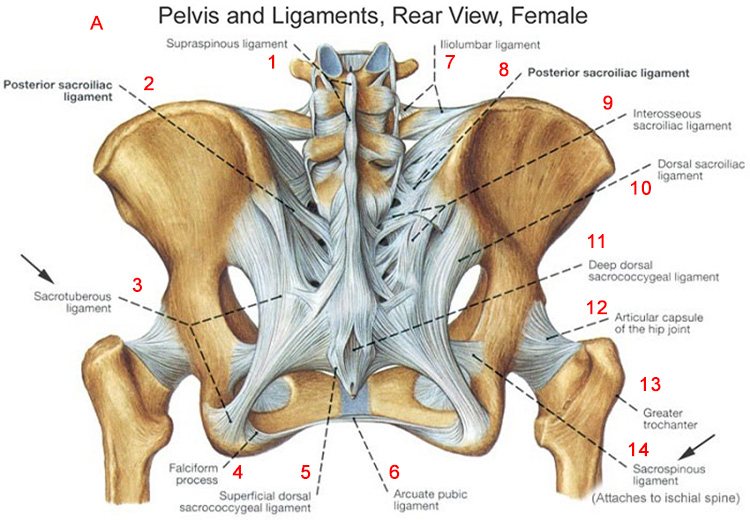
The mother's womb provides insulation against external agents such as light and sound. It also provides a strong shield against shock and pressure, thus protecting the baby from any discomfort or inconvenience. Located in the pelvic cavity, the womb is well protected by the thick and strong bones that surround the “endometrium” on the inside – and this helps to bear the weight of the embryo until the end of pregnancy. This structure, made up of powerful muscles, is ideally constructed for the baby's growth and development. During pregnancy, the ligaments attaching the bones in the region together become thicker and longer. These ligaments that attach the top of the womb to the strong pelvic bones make the womb very strong and stable.
The ligaments that tightly bind the bones together in the pelvic region can be seen.
Yet, despite blocking out so much, the embryo still has unrestricted access to what it needs to develop: heat, water, oxygen and nutrients all contribute to its miraculous development. The mother's womb undergoes many changes that enhance its strength during pregnancy. Together with the muscles, ligaments and elastic tissues it contains, there is also an increase in the number of blood vessels and nerves. The womb is thus able to increase 20 times in weight and 1,000 times in capacity without coming to any harm.177 The fallopian tubes that support the womb, the ovaries and other connective tissues all expand and become more elastic.178 The constant changes in the womb continue even after the embryo has grown into a healthy baby many hundreds of times larger than its initial state. The womb now changes in such a way as to permit the baby to exit in a healthy manner.
During pregnancy, another extraordinary state of affairs regarding the protection of the baby comes about. The baby is also protected against internal threats. When a foreign body enters the body, such as during an organ or bone marrow transplant, the host's defense system begins reacting, and this can sometimes lead to fatal consequences.179 But that never happens to the fetus, and the mother's immune system does not regard it as a foreign body. It is quite amazing that the mother's immune system tolerates foreign genes from the father; because the baby is, after all, 50% foreign body. Marianne van den Heuvel, a scientist from Guelph University, describes this as “fascinating” and continues: “That was always a puzzle from an immunology standpoint because the fetus is actually foreign. It's part of the mother and also part of the father. It should be rejected by the body.”180
Blood Cells
One would expect the defense system to declare war on the fetus's cells in much the same way that an army should declare war on foreign occupiers of their country. This defense system, when working properly, swiftly identifies viruses and tumors as foreign bodies – and then kills them. But, by the will of Allah, no such thing happens, and the womb remains a very safe and secure place for the baby to develop.
All the information about embryology provided in the Qur'an is in full agreement with modern medicine. This information, which has emerged through advanced technology, is one of the clearest proofs that the Qur'an is the revelation of our Lord, the Creator of all. The following is also revealed:
«And in your Creation and all the creatures He has spread about there are Signs for people with certainty.»